There’s something magical about the steady tick-tock of a grandfather clock—a sound that echoes through generations, marking time with quiet dignity. These towering timepieces aren’t just clocks; they’re heirlooms, storytellers, and works of art rolled into one. Whether you’ve grown up with one in your hallway or simply admired their grandeur in old movies, grandfather clocks have a way of capturing our imagination.
But what makes these clocks so special? In this article, we’ll explore the rich history of grandfather clocks, from their 17th-century origins to their place in modern homes. You’ll also discover how they work, why they’re called “grandfather” clocks, and tips for choosing or maintaining one of these timeless treasures.
Whether you’re a collector, a history buff, or just someone who appreciates fine craftsmanship, there’s no denying the charm of a grandfather clock. Let’s step into the world of these magnificent timekeepers and uncover the secrets behind their enduring appeal.
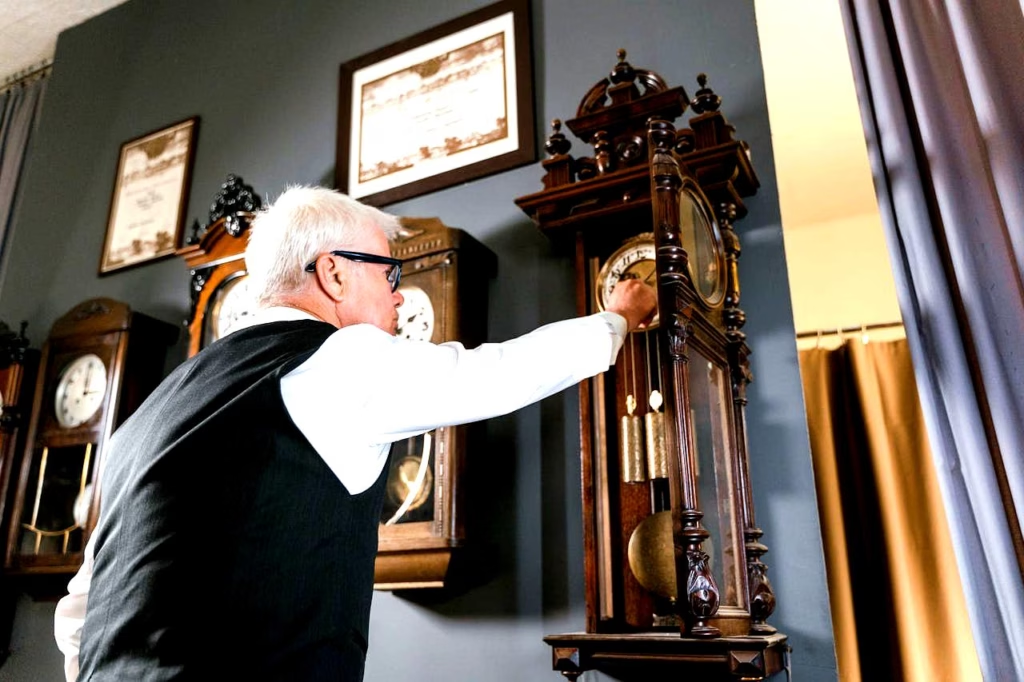

Why Is My Grandfather Clock Running Too Fast?
If your grandfather clock is running too fast, the most likely culprit is the pendulum length. During warmer months, temperature changes can cause the pendulum to expand or contract, affecting its timing. A shorter pendulum will swing faster, making the clock gain time.
To fix this, locate the regulating nut at the bottom of the pendulum. Turning it clockwise will lengthen the pendulum, slowing the clock down. Conversely, turning it counterclockwise shortens the pendulum, speeding it up. Make small adjustments and allow a day or two for the clock to stabilize before further tweaks.
Other factors like uneven flooring or mechanical wear can also cause timing issues. Ensure the clock is level and check for any visible damage to the movement. Regular maintenance, such as oiling the gears, can help keep your grandfather clock running accurately for years.
Why Does the Pendulum Keep Stopping?
A pendulum that stops swinging is a common issue in grandfather clocks. Often, this happens because the clock is not level or the beat is uneven. If the clock tilts even slightly, the pendulum may lose momentum and stop.
First, use a level to check if the clock is perfectly upright. Adjust the feet or positioning until it sits evenly. Next, listen to the tick-tock rhythm—it should be steady and even. If it sounds irregular, gently nudge the pendulum to reset the beat.
Another possible cause is binding in the mechanism. Inspect the gears for proper end play on their shafts. Dust or debris can also hinder movement, so a careful cleaning might help. If the problem persists, consult a professional clockmaker to avoid further damage.
Common Reasons Your Grandfather Clock Stops Working
A grandfather clock that stops running often has a simple explanation. One frequent cause is an unstable case. If the clock isn’t securely wedged or anchored, the weights can sway slightly, making the entire case move. This subtle motion disrupts the pendulum’s swing.
To solve this, ensure the clock is firmly placed against a wall and on a level surface. Check that the weights hang freely without touching each other or the sides. Also, verify that the pendulum bob isn’t obstructed by any part of the case.
Other issues include worn-out components or dirty mechanisms. Regular servicing can prevent these problems. If your grandfather clock still won’t run, a professional inspection may be needed to identify hidden mechanical faults.
What Causes a Timepiece to Gain Time?
If your grandfather clock is running too fast, the issue often lies with the pendulum. The pendulum’s length directly affects the clock’s timing. Shortening the pendulum speeds up the clock, while lengthening it slows it down. To adjust, turn the nut at the bottom of the pendulum to the right to raise the bob (the weighted disk). This makes the pendulum shorter and the clock run faster.
Conversely, turning the nut to the left lowers the bob, lengthening the pendulum and slowing the clock. Small adjustments can make a big difference, so change the nut position gradually. Remember, a grandfather clock is sensitive to temperature and humidity, which can also affect timing. Regular maintenance ensures accurate timekeeping.
Top Reasons Your Clock Isn’t Running
A grandfather clock may stop working for several reasons. One common cause is improper weight alignment. When the weights descend to the same level as the pendulum bob, they can sway slightly, making the clock case move. Even a tiny motion can disrupt the pendulum’s swing and stop the clock.
Other issues include dust buildup, worn-out parts, or an uneven floor. To fix this, check if the clock is level and ensure the weights hang freely. If the problem persists, inspect the mechanism for dirt or damage. Regular cleaning and proper placement help keep your grandfather clock running smoothly.
How to Adjust a Slow-Moving Grandfather Clock
If your clock is running slow, you can easily adjust it. Start by locating the pendulum’s adjustment nut. Turn the nut to the right to raise the bob, shortening the pendulum and speeding up the clock. For small adjustments, turn the nut gently and wait a day to see the effect.
If the clock is still slow, repeat the process. Remember, lower is slower—lengthening the pendulum by lowering the bob slows the clock. After adjusting, restart the pendulum and reset the clock hands to the correct time. With patience, your clock will keep perfect time.
Simple Fixes for a Lagging Timepiece
Is your grandfather clock running slow? This common issue often has a simple solution. The key lies in adjusting the pendulum bob. To speed up a sluggish clock, gently screw the bob upward. This shortens the pendulum’s swing, making the mechanism run faster. Conversely, unscrewing it lowers the bob, lengthening the swing and slowing the timepiece.
These adjustments require patience. Turn the bob in small increments, then wait 24 hours to check accuracy. Remember, even a quarter-turn can make a noticeable difference. For best results, use a reliable reference time like an atomic clock or smartphone app to compare.
Other factors like temperature changes or uneven flooring can also affect timing. Ensure your grandfather clock stands on a level surface away from drafts. With these easy tweaks, your cherished timekeeper will maintain perfect rhythm for years to come.
The Fascinating History of These Timeless Pieces
The evolution of longcase clocks began with a groundbreaking 17th-century innovation. In 1658, Robert Hooke’s anchor escapement mechanism revolutionized timekeeping. This clever invention replaced the older verge escapement system, which required impractical 80-100 degree pendulum swings.
This new mechanism allowed for narrower, more efficient pendulum movements. Clockmakers quickly adopted the design, creating taller cases to house the long pendulums. Thus, the iconic floor-standing clock was born.
Early models were status symbols, showcasing both engineering prowess and artistic craftsmanship. The distinctive hood, trunk, and base design became standardized by the 18th century. Today, these historical masterpieces remain prized for their precision and elegance.
What Powers These Classic Timekeepers?
Traditional eight-day grandfather clocks operate using an ingenious weight-driven system. Two separate weights work in harmony: one powers the pendulum’s steady motion while the other activates the striking mechanism. This dual-weight design ensures accurate timekeeping and reliable chime operation throughout the week.
The weights gradually descend as they power the clock, requiring weekly winding. Many models feature beautiful brass or cast iron weights that add to their visual appeal. The striking mechanism typically uses hammers to strike bells or play melodic chime sequences.
This mechanical system, perfected over centuries, creates the distinctive ticking and chiming sounds we associate with these heirloom-quality timepieces. Unlike modern quartz movements, these clocks celebrate the artistry of mechanical engineering.
The Inventor Behind the First Long-Case Clock
The origins of the grandfather clock trace back to the late 16th century. In 1582, Galileo Galilei made a groundbreaking discovery: a pendulum could measure time with remarkable accuracy. While he sketched early designs, he never built a functional clock. Decades later, in 1656, Dutch scientist Christiaan Huygens brought Galileo’s vision to life. He constructed the first known long-case clock, using a pendulum mechanism to ensure precise timekeeping.
This innovation revolutionized time measurement, replacing less reliable methods like hourglasses and water clocks. The pendulum’s steady swing became the heartbeat of these elegant timepieces. Early models, often called long-case or tall-case clocks, laid the foundation for the classic grandfather clocks we recognize today. Their accuracy made them essential in homes, churches, and public spaces, marking a new era in horology.
Do Grandfather Clocks Require Electrical Power?
Traditional grandfather clocks operate without electricity, relying on mechanical ingenuity instead. The pendulum’s rhythmic swing is powered by weights or coiled springs, which slowly descend or unwind to release energy. This energy drives the clock’s gears and keeps the pendulum moving with a constant rhythm.
However, some modern versions incorporate electric components. These hybrid models might use electricity to power the pendulum or chime mechanisms, eliminating the need for manual winding. Despite these updates, many enthusiasts prefer the charm of purely mechanical clocks. The gentle tick-tock of a weight-driven pendulum remains a hallmark of classic long-case clock design, offering both beauty and precision without a power cord.
Understanding the Pendulum’s Suspension System
At the heart of every grandfather clock is its pendulum, suspended by a clever mechanism called the escapement. Invented in the 17th century, this system gives the pendulum a tiny nudge with each swing. These small pushes compensate for friction, ensuring the pendulum maintains a steady amplitude over time.
The escapement works like a delicate dance. As the clock’s gears turn, a toothed wheel interacts with an anchor-shaped piece, releasing the pendulum at just the right moment. This interaction not only keeps the pendulum swinging but also regulates the clock’s accuracy. Without this ingenious system, the long-case clock wouldn’t have earned its reputation as a precision timekeeper. Today, this timeless technology continues to captivate collectors and horology enthusiasts alike.
Explaining How These Clocks Work to Children
A grandfather clock is a special type of pendulum clock that stands tall and proud in a wooden case. Kids often wonder how it works, and the answer is both simple and fascinating! The clock has a long pendulum inside that swings back and forth like a slow-moving swing. This pendulum is the heart of the clock, keeping time with each steady swing.
The clock is powered by heavy weights that slowly drop down, turning a drum as they descend. Gears connected to the drum move the clock’s hands, making them tick forward. The escape wheel is another important part—it lets the gears move just a little bit with each swing of the pendulum. This is what creates the familiar tick-tock sound! So, every time you hear that sound, it means the pendulum is doing its job, keeping the grandfather clock accurate and reliable.
The Science Behind Pendulum Timekeeping
Pendulum clocks, like the grandfather clock, rely on the steady motion of a swinging weight to keep time. The pendulum acts as a harmonic oscillator, meaning it swings back and forth in a perfectly timed rhythm. This consistency is what makes pendulum clocks so accurate.
The secret lies in the pendulum’s length—the longer it is, the slower it swings. Gravity pulls the pendulum downward, while its weight resists changes in speed, creating a reliable timekeeping mechanism. Even small changes in temperature or movement can affect its swing, which is why precision is key. Over centuries, this simple yet brilliant design has made pendulum clocks, including the grandfather clock, a timeless marvel of engineering.
“`html
In summary, the grandfather clock stands as a timeless symbol of craftsmanship, tradition, and elegance. This article explored its rich history, intricate mechanics, and enduring appeal, highlighting how these towering timepieces have graced homes for centuries. From their origins in 17th-century England to their modern-day adaptations, grandfather clocks continue to captivate with their melodic chimes and stately presence.
Whether you’re an antique enthusiast or simply appreciate classic design, a grandfather clock offers both functional beauty and a connection to the past. If you’re considering adding one to your space, take the time to explore its features and find a piece that resonates with your style. After all, owning a grandfather clock isn’t just about telling time—it’s about cherishing a legacy.
Ready to embrace this iconic heirloom? Start your search today and let the grandfather clock become a cherished centerpiece in your home.